
Introduction
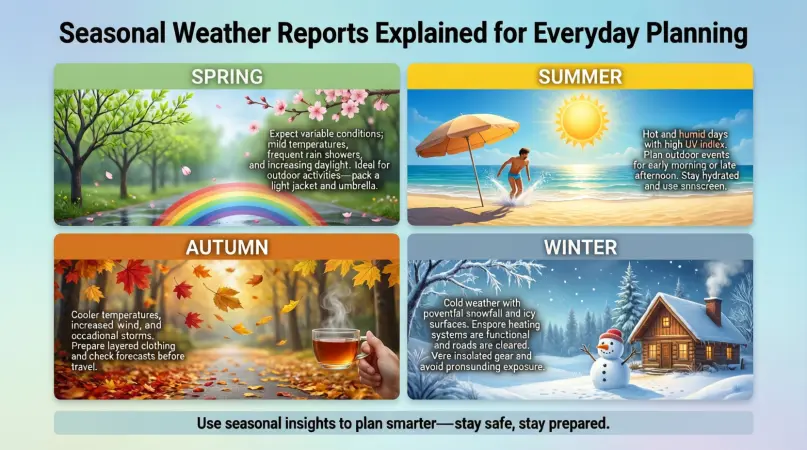
Seasonal weather reports play a very important role in our daily and long-term planning. Whether you are a student, farmer, business owner, traveler, or simply someone who wants to stay prepared, understanding seasonal weather reports can make life easier and safer. These reports help people know what kind of weather to expect over a season, such as winter, summer, spring, or autumn. Instead of guessing, you get a clearer picture of temperature trends, rainfall patterns, and possible extreme weather events.
In today’s changing climate, seasonal weather reports have become even more valuable. Weather patterns are no longer as predictable as they used to be. Some summers are hotter than normal, while some winters bring unexpected rain or snowfall. Because of this, seasonal weather reports help communities, governments, and individuals prepare in advance. For example, farmers can decide which crops to plant, and families can plan holidays or important events.
Seasonal weather reports are not only for experts. They are written to guide the public as well. When understood correctly, they reduce risks and improve decision-making. Many people confuse daily forecasts with seasonal reports, but both serve different purposes. Daily forecasts tell you about today or tomorrow, while seasonal weather reports focus on long-term trends.
This article explains seasonal weather reports in simple English. You will learn what they are, why they matter, how to use them step by step, and what mistakes to avoid. By the end, you will feel more confident using seasonal weather reports in your daily life.
What is Seasonal Weather Reports?
Seasonal weather reports are detailed summaries and predictions about weather patterns over a specific season. A season usually lasts several months, such as summer, winter, spring, or autumn. These reports focus on general trends rather than exact daily conditions.
Seasonal weather reports often include information about average temperatures, rainfall levels, humidity, and chances of extreme events. For example, a report may say that the upcoming summer is expected to be hotter than normal or that rainfall may be lower than average. This helps people prepare mentally and practically.
Unlike short-term forecasts, seasonal weather reports are based on long-term data analysis. Meteorologists study past weather records, ocean temperatures, wind patterns, and atmospheric conditions. They use this data to make educated predictions. While these reports are not always perfect, they provide useful guidance.
Seasonal weather reports are commonly used by agriculture sectors, disaster management teams, energy companies, and policymakers. However, regular citizens can also benefit. Understanding these reports helps families plan budgets, clothing needs, and travel schedules.
In simple terms, seasonal weather reports tell you what kind of weather behavior to expect over the coming months. They do not predict exact dates but give a general outlook to help you stay prepared.
Why is Seasonal Weather Reports Important?
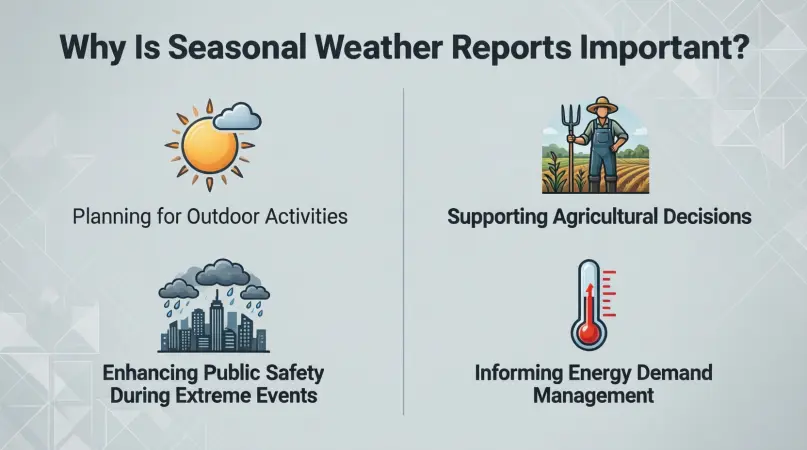
Seasonal weather reports are important because they reduce uncertainty. When people know what kind of season lies ahead, they can make smarter choices. This is especially true in areas where weather strongly affects daily life.
One key reason seasonal weather reports matter is safety. Early warnings about extreme heat, cold, or heavy rainfall can save lives. Governments use these reports to plan emergency responses and public awareness campaigns.
Another reason is economic planning. Many industries depend on weather conditions. Farmers rely on seasonal weather reports to choose crops and irrigation methods. Energy companies use them to estimate electricity demand. Tourism businesses adjust their strategies based on expected weather trends.
Seasonal weather reports also support environmental protection. When authorities know that a dry season is coming, they can manage water resources more carefully. Similarly, predictions of heavy rain help in flood preparation.
For individuals, these reports help with personal planning. Families can plan vacations, home repairs, and outdoor events with fewer surprises. Students and workers can prepare for seasonal challenges like heatwaves or cold spells.
Overall, seasonal weather reports are important because they support safety, economic stability, and better decision-making at every level of society.
Detailed Step-by-Step Guide
Step 1: Understand the Purpose of the Report
Before reading seasonal weather reports, it is important to understand their purpose. These reports are not daily forecasts. They focus on trends and probabilities over a long period.
You should read them to understand general conditions, such as whether temperatures will be above or below average. This mindset helps avoid disappointment when daily weather does not match expectations.
Step 2: Identify the Season and Region
Seasonal weather reports are always specific to a region and time period. Make sure you are reading the report for your area and the correct season.
Weather patterns can vary widely between regions. A wet season in one area may be dry in another. Always check the regional focus of the report.
Step 3: Review Temperature Predictions
Temperature is one of the main elements of seasonal weather reports. Look for phrases like “above average,” “near normal,” or “below average.”
These terms indicate how the upcoming season compares to historical data. Understanding this helps with clothing choices, energy planning, and health precautions.
Step 4: Analyze Rainfall and Precipitation Data
Rainfall predictions are crucial, especially for agriculture and water management. Seasonal weather reports usually mention expected rainfall levels.
Pay attention to whether rainfall is expected to increase or decrease. This information helps farmers plan crops and helps cities manage water supplies.
Step 5: Note Extreme Weather Risks
Many seasonal weather reports include warnings about possible extreme weather. This may include heatwaves, droughts, storms, or floods.
Even if the risk is low, being aware helps with early preparation. Emergency kits and safety plans can be adjusted accordingly.
Step 6: Apply the Information to Your Needs
After understanding the data, apply it to your personal or professional situation. For example, businesses can adjust supply chains, and families can plan activities.
The real value of seasonal weather reports comes from using the information wisely.
Benefits of Seasonal Weather Reports
- Help people plan ahead with more confidence
- Reduce risks related to extreme weather events
- Support farmers in crop and irrigation planning
- Improve disaster preparedness and response
- Assist businesses in managing costs and resources
- Help governments make informed policy decisions
- Encourage better water and energy management
- Support travel and tourism planning
Disadvantages / Risks
- Predictions are based on probabilities, not certainty
- Reports may be misunderstood by beginners
- Sudden weather changes can still occur
- Overreliance may lead to poor short-term decisions
- Limited accuracy in regions with complex climates
- Misinterpretation can cause unnecessary worry
Common Mistakes to Avoid
One common mistake is treating seasonal weather reports as exact forecasts. These reports show trends, not daily details. Expecting precise dates or events leads to confusion.
Another mistake is ignoring regional differences. People sometimes read general reports without checking if they apply to their location. Always confirm the region.
Some readers focus only on temperature and ignore rainfall or extreme weather risks. This can result in poor planning, especially for agriculture or travel.
Overreacting to predictions is also a mistake. Seasonal weather reports indicate possibilities, not guarantees. Use them as guidance, not as absolute truth.
Finally, many people read reports once and forget them. It is better to review updates, as seasonal outlooks can change with new data.
FAQs
What is the difference between daily forecasts and seasonal weather reports?
Daily forecasts focus on short-term weather, usually for a few days. Seasonal weather reports look at long-term trends over months. Both serve different purposes.
How accurate are seasonal weather reports?
Seasonal weather reports are based on scientific models and historical data. While they are not perfect, they provide useful guidance about general trends.
Who should use seasonal weather reports?
Everyone can benefit, but they are especially useful for farmers, businesses, travelers, and emergency planners. Individuals also gain by planning daily life better.
Can seasonal weather reports predict extreme events?
They cannot predict exact events or dates, but they can indicate increased chances of extremes like heatwaves or heavy rainfall.
How often are seasonal weather reports updated?
Many organizations update them monthly or quarterly. Updates reflect new data and improve accuracy over time.
Are seasonal weather reports affected by climate change?
Yes, climate change influences weather patterns. Seasonal weather reports now consider changing trends and increased variability.
Expert Tips & Bonus Points
Always read seasonal weather reports from reliable sources and compare updates over time. This helps build a clearer picture of expected conditions.
Focus on probabilities, not promises. When a report says “likely,” it means there is still uncertainty. Plan with flexibility.
Use seasonal weather reports alongside short-term forecasts. This combination gives both long-term direction and daily accuracy.
For beginners, keep notes of past reports and actual outcomes. Over time, this improves understanding and trust in the data.
Discuss seasonal weather reports with family or team members. Shared understanding leads to better collective decisions.
Conclusion
Seasonal weather reports are powerful tools that help people prepare for the months ahead. They provide valuable insights into temperature trends, rainfall patterns, and potential weather risks. When used correctly, they reduce uncertainty and support smarter planning in many areas of life. From agriculture and business to personal safety and travel, the benefits are wide-ranging.
Understanding seasonal weather reports does not require technical knowledge. By focusing on general trends and probabilities, anyone can learn to use them effectively. It is important to remember that these reports are guides, not guarantees. Weather can still surprise us, but preparation always improves outcomes.