
Introduction
Political analysis in Pakistan is essential for anyone who wants to understand how the country functions at a national and regional level. Pakistan’s politics has always been dynamic, with multiple parties, shifting alliances, and frequent changes in leadership. From the federal government to provincial assemblies, every decision impacts the economy, foreign policy, and daily life. Political analysis helps citizens, researchers, and policymakers understand these complex dynamics.
Pakistan’s political landscape is shaped by historical events, socio-economic factors, and cultural influences. Over the years, elections, protests, and judicial decisions have contributed to the political atmosphere. By analyzing these events, one can predict future trends, understand policy impacts, and make informed decisions. Political analysis is not just about observing what happens; it involves examining why events unfold, how decisions are made, and what their long-term consequences might be.
For beginners, political analysis Pakistan might seem confusing, but breaking it down into simple concepts makes it easier to grasp. Intermediate readers benefit from understanding trends, party ideologies, and governance patterns. Political analysts use tools such as voter surveys, media coverage, historical records, and public opinion to create a comprehensive picture. With proper analysis, citizens can engage more effectively in discussions, contribute to democratic processes, and hold leaders accountable.
What is Political Analysis Pakistan?
Political analysis Pakistan is the study and interpretation of the country’s political events, trends, and decision-making processes. It involves examining policies, political parties, leadership strategies, elections, and public opinion. The goal is to understand the causes and effects of political actions and predict future developments.
Political analysis is different from political reporting. While reporting shares news, analysis interprets events, explains their significance, and evaluates outcomes. For example, reporting might state that a new law has been passed, but analysis would explore how it affects citizens, the economy, and political stability.
In Pakistan, political analysis covers several areas:
- Government Policies: How federal and provincial policies influence society and economy.
- Political Parties: Understanding ideologies, leadership, and electoral strategies.
- Election Trends: Analyzing voting patterns, turnout, and demographic influences.
- Judiciary and Governance: Evaluating decisions by courts and government bodies.
- Public Opinion: Measuring citizens’ views on leaders, policies, and national issues.
Political analysis Pakistan helps bridge the gap between complex political events and public understanding. It is a tool to make sense of political debates, controversies, and policy decisions in a structured way.
Why is Political Analysis Pakistan Important?
Political analysis Pakistan is important for several reasons:
- Informed Citizens: Understanding politics empowers citizens to participate in democratic processes responsibly.
- Policy Evaluation: Analysis helps assess whether government policies are effective or need improvement.
- Predicting Trends: Experts can forecast political shifts, election outcomes, and policy impacts.
- Reducing Misinformation: Clear analysis reduces the influence of rumors, fake news, and biased reporting.
- Strategic Decision-Making: Businesses, NGOs, and political leaders can plan strategies based on reliable insights.
Without political analysis, it becomes difficult to make sense of frequent changes in leadership, party alliances, and public opinion. For example, analyzing the impact of budget allocations, tax policies, or foreign agreements can reveal which sectors will benefit and which may face challenges.
Political analysis Pakistan also promotes accountability. By examining government actions critically, analysts highlight successes, failures, and areas for reform. This encourages transparency and strengthens democratic institutions.
Detailed Step-by-Step Guide to Political Analysis Pakistan
Political analysis requires a structured approach. Here’s a step-by-step guide to understand Pakistan’s politics effectively.
Step 1: Research Historical Context
Understanding the present requires knowledge of the past. Key historical events include:
- Independence in 1947
- Partition and migration impacts
- Military coups and transitions to democracy
- Major constitutional amendments
- Past election outcomes
Historical research provides a foundation for analyzing current political dynamics. For example, knowing past military interventions helps explain the influence of defense institutions in politics.
Step 2: Study Political Parties and Leaders
Analyze major political parties such as:
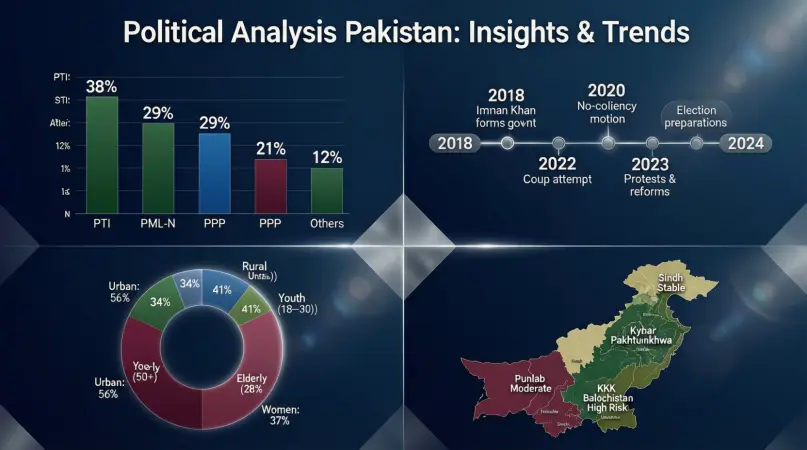
- Pakistan Tehreek-e-Insaf (PTI) – Leadership strategies, electoral base, and policy positions.
- Pakistan Muslim League-Nawaz (PML-N) – Strongholds, economic focus, and historical influence.
- Pakistan Peoples Party (PPP) – Legacy, rural support, and social policies.
- Emerging Parties – Regional and issue-based parties impacting local politics.
Focus on leadership styles, decision-making patterns, alliances, and public perception. This gives insight into how parties function and influence national policy.
Step 3: Monitor Current Events
Regularly track:
- Parliamentary sessions and bills
- Election campaigns and polling data
- Protests, strikes, and social movements
- Media coverage and interviews with political figures
This helps analysts interpret events as they happen, rather than relying solely on past data.
Step 4: Analyze Policies and Governance
Evaluate policies based on:
- Economic impact (e.g., inflation, employment)
- Social outcomes (e.g., education, healthcare)
- Governance efficiency and transparency
- Public satisfaction and feedback
For instance, a new education policy may seem beneficial on paper, but analysis can reveal implementation challenges and regional disparities.
Step 5: Evaluate Public Opinion
Public opinion influences political outcomes. Use tools such as:
- Surveys and polls
- Social media sentiment analysis
- Focus groups and interviews
Understanding citizens’ concerns helps predict election trends and policy reception.
Step 6: Identify Key Political Trends
After gathering data, identify patterns:
- Voting behavior in urban vs. rural areas
- Shifts in party popularity
- Impact of economic policies on political support
- Influence of media narratives
Trends guide future predictions and strategic planning.
Step 7: Report and Communicate Findings
Present analysis in a clear, structured format:
- Use simple language
- Include charts, graphs, and bullet points for clarity
- Offer actionable insights rather than opinions
- Highlight potential risks and opportunities
Effective communication ensures that analysis is understood by a wider audience.
Benefits of Political Analysis Pakistan
Political analysis offers multiple advantages:
- Informed Decision-Making: Citizens and policymakers make choices based on evidence.
- Predicting Political Shifts: Anticipate election outcomes, protests, or policy changes.
- Enhanced Civic Engagement: Citizens understand how to participate meaningfully.
- Policy Improvement: Highlight areas of success and reform needs.
- Conflict Resolution: Identify sources of political tension and propose solutions.
- Economic Planning: Businesses adjust strategies based on political stability.
Disadvantages / Risks
While political analysis is valuable, it comes with risks:
- Bias: Personal opinions may distort objective analysis.
- Misinformation: Reliance on inaccurate data can lead to wrong conclusions.
- Oversimplification: Ignoring complex socio-economic factors reduces accuracy.
- Political Backlash: Analysts may face criticism from powerful stakeholders.
- Overemphasis on Predictions: Forecasting can be unreliable, especially in volatile environments.
Common Mistakes to Avoid
- Ignoring Context: Political events cannot be analyzed in isolation.
- Relying Solely on Media: Media may present biased or incomplete information.
- Neglecting Public Opinion: Citizens’ perspectives are crucial for accurate analysis.
- Overlooking Local Dynamics: Provincial and regional politics often differ from national trends.
- Confusing Facts with Opinions: Analysis should clearly differentiate between data and interpretation.
- Skipping Historical Insight: Past events shape present decisions and trends.
FAQs
1. What is the main purpose of political analysis Pakistan?
Political analysis Pakistan aims to interpret political events, understand their causes and effects, and predict trends. It helps citizens, policymakers, and researchers make informed decisions.
2. How can beginners start analyzing politics in Pakistan?
Start by reading news from multiple sources, studying political party profiles, and understanding historical context. Gradually, focus on public opinion, election trends, and policy impacts.
3. Which political parties are most influential in Pakistan?
The major parties include Pakistan Tehreek-e-Insaf (PTI), Pakistan Muslim League-Nawaz (PML-N), and Pakistan Peoples Party (PPP). Emerging regional parties also play a significant role.
4. Why is historical context important in political analysis?
History provides insight into why political structures exist, the origins of party influence, and the reasons behind recurring patterns or conflicts.
5. Can political analysis predict election results accurately?
While it can indicate trends, predictions are not always exact due to changing voter behavior, unexpected events, and electoral complexities.
6. How does political analysis impact policymaking?
Analysis identifies strengths and weaknesses in policies, allowing leaders to make informed decisions, improve governance, and address public concerns effectively.
7. Are there risks in conducting political analysis?
Yes. Bias, misinformation, oversimplification, and political backlash are common risks. Analysts must use verified data and maintain objectivity.
8. How often should political analysis be updated?
Ideally, analysis should be updated regularly, especially during elections, policy changes, or major political events.
Expert Tips & Bonus Points
- Diversify Sources: Use newspapers, social media, academic research, and interviews for balanced insights.
- Track Regional Politics: Provincial and local politics can differ from national trends.
- Focus on Trends, Not Headlines: Short-term news can be misleading; look for long-term patterns.
- Understand Voter Demographics: Age, education, occupation, and region influence political behavior.
- Be Objective: Avoid letting personal opinions affect analysis.
- Use Visual Tools: Charts, graphs, and infographics enhance understanding and communication.
- Engage in Discussions: Debating with peers strengthens analytical skills and exposes blind spots.
- Follow Policy Impacts: Examine not just the law but its execution and results on citizens’ lives.
Conclusion
Political analysis Pakistan is a vital tool for understanding the nation’s complex political environment. It transforms raw events, policies, and public reactions into actionable insights. By examining historical context, studying political parties, monitoring current events, evaluating policies, and considering public opinion, analysts can predict trends and support informed decision-making.
For citizens, political analysis promotes awareness and civic engagement, ensuring they participate meaningfully in democratic processes. For policymakers, it highlights the effectiveness of governance and potential areas of reform. Despite challenges like bias or misinformation, structured analysis provides clarity in a rapidly changing political landscape.