
Introduction
Economic growth trends shape the way countries develop, businesses expand, and people improve their quality of life. In simple words, these trends show how an economy is moving over time. Some periods bring fast growth, while others experience slowdowns or even decline. Understanding economic growth trends helps beginners and intermediate readers make sense of news, government policies, and business decisions.
In today’s connected world, economic growth trends are discussed everywhere. You hear about them in news headlines, government reports, and business talks. However, many people feel confused because the topic sounds complex. The good news is that you do not need to be an expert to understand it. With clear explanations and real-life examples, anyone can learn how economic growth trends work.
This article is written in simple English to make learning easy and practical. It explains what economic growth trends are, why they matter, and how they affect daily life. You will also learn about benefits, risks, common mistakes, and expert tips. Most importantly, this guide focuses on clarity and usefulness rather than technical language.
By the end of this article, you will have a strong understanding of economic growth trends and feel confident discussing them. Whether you are a student, a small business owner, or just someone curious about the economy, this guide is designed to help you learn step by step in a friendly and professional way.
What is Economic Growth Trends?
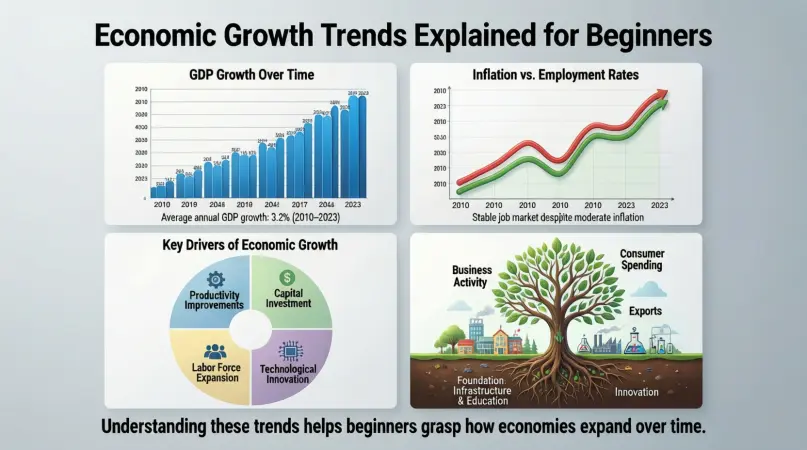
Economic growth trends refer to the long-term direction in which an economy grows or shrinks. They measure changes in a country’s production of goods and services over time. Usually, this growth is tracked using indicators like Gross Domestic Product, income levels, and employment rates.
In simple terms, when an economy produces more goods and services than before, it is growing. When production slows down, growth weakens. Economic growth trends show whether this change is steady, fast, or unstable.
These trends are not the same every year. Some years show strong growth due to investment and innovation. Other years may show slower growth because of inflation, political issues, or global problems. By studying economic growth trends, experts can understand patterns and predict future performance.
For everyday people, economic growth trends explain why jobs increase, wages rise, or prices change. They are a useful tool for understanding how the economy affects personal finances and national development.
Why is Economic Growth Trends Important?
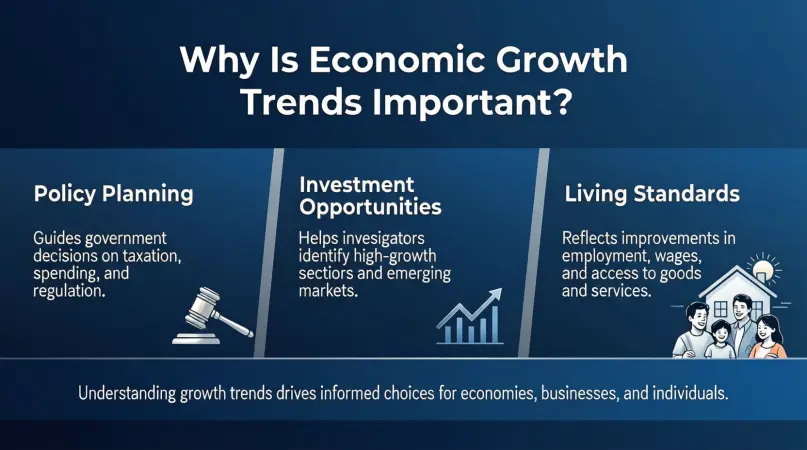
Economic growth trends are important because they guide decisions at every level of society. Governments use them to plan budgets and policies. Businesses rely on them to decide when to invest or expand. Individuals depend on them for job security and income growth.
When economic growth trends are positive, living standards usually improve. More jobs are created, incomes rise, and public services get better. On the other hand, weak growth trends can lead to unemployment, lower income, and financial stress.
These trends also help identify long-term challenges. For example, if growth depends too much on one sector, the economy becomes risky. Understanding trends allows countries to diversify and plan for stability.
In short, economic growth trends are a roadmap. They show where the economy has been and where it might go next. This makes them essential for smart planning and sustainable development.
Detailed Step-by-Step Guide
Step 1: Understanding Key Indicators
Economic growth trends are measured using indicators. The most common include GDP growth rate, employment levels, and industrial output. These indicators give a clear picture of economic performance.
Step 2: Analyzing Short-Term and Long-Term Trends
Short-term trends show yearly changes, while long-term trends reveal patterns over decades. Both are important for understanding stability and progress.
Step 3: Identifying Growth Drivers
Growth drivers include investment, technology, education, and trade. These factors push economies forward and shape economic growth trends.
Step 4: Recognizing Barriers to Growth
Barriers include inflation, political instability, and poor infrastructure. Identifying these helps explain slow or negative growth trends.
Step 5: Comparing Regional and Global Trends
Economic growth trends vary by region. Comparing them helps understand global competition and opportunities.
Benefits of Economic Growth Trends
- Help governments plan effective policies
- Support business expansion and investment decisions
- Improve employment and income levels
- Encourage innovation and productivity
- Raise living standards over time
Disadvantages / Risks
- Unequal growth can increase income gaps
- Overgrowth may cause inflation
- Dependence on one sector increases risk
- Environmental damage from rapid growth
- Short-term focus may ignore sustainability
Common Mistakes to Avoid
Many people misunderstand economic growth trends by focusing only on GDP. Growth quality matters as much as growth speed. Another mistake is ignoring long-term trends and reacting only to short-term changes.
It is also wrong to assume that growth benefits everyone equally. Without fair policies, some groups may be left behind. Avoiding these mistakes leads to a clearer and more balanced understanding.
FAQs
What are economic growth trends in simple words?
Economic growth trends show how an economy grows or slows down over time by tracking production and income changes.
How often do economic growth trends change?
They change yearly but are best understood over long periods to see real patterns.
Why do economic growth trends differ between countries?
Differences in resources, education, technology, and policies cause varied growth trends.
Can economic growth trends predict the future?
They cannot predict exactly but help estimate possible future directions.
How do economic growth trends affect jobs?
Positive trends usually create more jobs, while weak trends reduce opportunities.
Are economic growth trends always good?
Not always. Fast growth without planning can cause inflation and inequality.
Expert Tips & Bonus Points
Experts suggest focusing on sustainable growth rather than quick gains. Investing in education, technology, and infrastructure supports healthy economic growth trends. Monitoring data regularly also helps make informed decisions.
Another bonus tip is to look beyond numbers. Social well-being and environmental balance are just as important as growth rates.
Conclusion
Economic growth trends play a vital role in shaping economies and everyday life. They explain how countries progress, why opportunities increase or decrease, and how future plans are made. For beginners and intermediate readers, understanding these trends does not require complex knowledge. With simple explanations and clear examples, the concept becomes easy to grasp.
Throughout this article, we explored what economic growth trends are, why they matter, and how they work step by step. We discussed benefits such as job creation and higher living standards, along with risks like inequality and inflation. We also covered common mistakes and answered important questions to clear confusion.